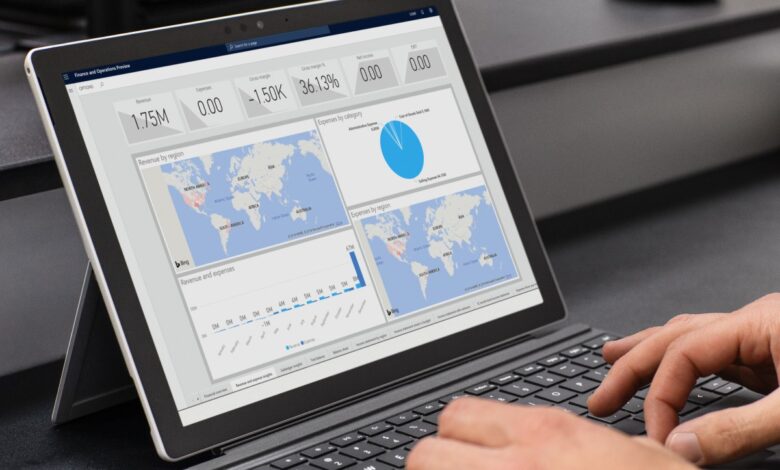
Walk into almost any growing business and you will hear the same kinds of frustrations. Sales teams are updating one system while finance works from another. Inventory data looks different depending on who pulls the report. Customer service staff scramble for information that should already be easy to find. At first, these issues seem small, but over time they create delays, confusion, and unnecessary costs.
That is one reason more companies are rethinking how they manage operations. Modern businesses need tools that connect departments instead of separating them. They also need technology that adapts quickly as markets shift, customer expectations rise, and remote work becomes more common. That is where platforms like Dynamics 365 have become such an important part of digital transformation conversations.
Unlike older enterprise systems that often felt rigid and difficult to customize, Microsoft’s business applications are designed to work across departments in a more connected and flexible way. Companies can manage sales, customer service, finance, operations, supply chain workflows, and field service activities from a unified environment. The result is not just better organization, but better decision making across the business.
Why Businesses Are Moving Away From Disconnected Systems
Many organizations still rely on a patchwork of spreadsheets, outdated databases, and disconnected software tools. This setup may work temporarily, especially for smaller teams, but it becomes increasingly difficult to manage as a business expands. Employees spend more time transferring information manually than actually using the data strategically.
Disconnected systems also create reporting problems. Leadership teams often struggle to get a clear picture of company performance because information is scattered across departments. A sales manager may see one revenue projection while finance reports something entirely different. These inconsistencies slow down planning and create unnecessary friction between teams.
Another challenge is customer experience. Consumers now expect fast answers, personalized communication, and seamless service interactions. Businesses cannot deliver that consistently if employees are constantly switching between systems or searching for missing information. Modern platforms are helping organizations close those gaps by centralizing processes and improving visibility across departments.
Cloud-based systems also provide greater flexibility than traditional on-premise software. Updates happen more efficiently, remote access becomes easier, and businesses can scale without rebuilding their infrastructure from scratch. For many organizations, this flexibility has become essential rather than optional.
Building Collaboration Across Departments
One of the biggest advantages of connected business systems is improved collaboration. When departments work from shared information, communication naturally becomes smoother and more productive. Teams no longer waste time arguing about which spreadsheet is accurate or waiting for manual updates from another department.
Consider a manufacturer managing both sales forecasting and inventory planning. If those systems are disconnected, inventory shortages or overproduction become much more likely. When departments share real-time information, however, purchasing decisions can align more closely with actual customer demand.
This level of visibility also improves accountability. Employees understand how their work affects the larger organization because they can see how processes connect. Small operational improvements begin to add up quickly when teams are no longer operating in isolation.
How Dynamics 365 Supports Modern Business Operations
What makes Dynamics 365 stand out for many organizations is its modular structure. Companies do not necessarily need to replace every system all at once. Instead, they can start with the applications that address their most immediate challenges and expand gradually as needs evolve.
For example, a business struggling with customer engagement might begin with sales and customer service applications. Another company focused on operational efficiency may prioritize finance and supply chain management tools first. This flexibility allows organizations to modernize at a pace that feels realistic for their teams and budgets.
The platform also integrates naturally with other Microsoft technologies that many businesses already use every day. Employees can connect workflows with familiar tools such as Microsoft Teams, Outlook, Excel, and Power BI. This familiarity often reduces training time and helps teams adopt new processes more comfortably.
Artificial intelligence and automation features are becoming another major advantage. Businesses can automate repetitive tasks, generate predictive insights, and improve forecasting accuracy without relying entirely on manual analysis. These capabilities help employees focus more on strategic work and less on routine administrative tasks.
Improving Customer Relationships Through Better Data
Customer expectations continue to rise across nearly every industry. People want faster service, more personalized communication, and quicker problem resolution. Businesses that cannot keep up risk losing customers to competitors with more responsive systems.
Connected customer data helps organizations understand buying behavior, communication history, and service needs more clearly. Sales teams can track opportunities more efficiently while customer support representatives gain instant access to relevant information during interactions.
This creates a smoother experience for customers and employees alike. Instead of forcing clients to repeat information across multiple departments, businesses can maintain continuity throughout the customer journey. Over time, these small improvements contribute to stronger loyalty and better retention rates.
Companies also gain stronger reporting capabilities that support long-term relationship management. Trends become easier to identify, customer pain points become more visible, and leadership teams can make decisions based on clearer insights rather than assumptions.
Digital Transformation Is More Than Software
Many businesses make the mistake of treating digital transformation as a purely technical project. In reality, successful transformation involves people, workflows, communication, and company culture just as much as software implementation.
Organizations that rush into new systems without preparing employees often struggle with adoption. Staff members may resist changes if they do not understand how the new processes benefit their daily work. Strong leadership and thoughtful training are critical for helping teams transition successfully.
Clear communication matters throughout the process. Employees need opportunities to ask questions, share concerns, and understand why changes are happening. Businesses that involve their teams early often experience smoother rollouts and better long-term results.
Technology alone cannot solve operational problems if outdated workflows remain unchanged. Successful companies use implementation projects as an opportunity to rethink inefficient processes and simplify how work gets done across the organization.
Preparing Teams for Long-Term Success
Training is often underestimated during software transitions. Businesses sometimes focus heavily on technical deployment while overlooking the human side of change management. Yet even the most advanced platform will struggle if employees do not feel confident using it.
Effective onboarding usually works best when it is practical rather than overly technical. Employees want to understand how tools will improve their actual day-to-day responsibilities. Hands-on training sessions and department-specific guidance typically create stronger adoption than generic presentations.
Leadership involvement also makes a difference. When managers actively support new systems and demonstrate commitment to the process, employees are more likely to embrace change. Transformation becomes easier when teams feel supported instead of pressured.
Long-term success depends on continuous improvement as well. Businesses should regularly evaluate workflows, gather employee feedback, and refine processes as the organization evolves. Technology works best when it adapts alongside the people using it.
Choosing The Right Technology Partner
Implementing enterprise software is rarely simple, especially for organizations managing complex operations or multiple locations. Many businesses benefit from working with experienced implementation partners who understand both the technical side and the operational realities of transformation projects.
An experienced partner can help businesses avoid common mistakes such as unrealistic timelines, poor integration planning, or insufficient training. They can also identify opportunities for automation and process improvements that internal teams may overlook during the planning stage.
This is one reason companies often look for providers with deep experience across multiple industries. Businesses want guidance that reflects real operational understanding, not just technical knowledge. Partners who understand manufacturing, distribution, retail, or service operations can often deliver more practical recommendations.
For organizations exploring enterprise modernization, companies like Sycor Americas have become part of that conversation by helping businesses implement and support Microsoft-based solutions tailored to operational needs. Strong partnerships can make a major difference in how smoothly companies transition from outdated systems to more connected digital environments.
Why Industry Experience Matters
Every industry has its own operational challenges. A manufacturing company managing supply chain disruptions faces different concerns than a healthcare provider handling patient communication or a retailer balancing inventory across locations.
Implementation partners with industry-specific experience are often better equipped to anticipate those challenges early. They can recommend workflows, reporting structures, and integrations that align more naturally with how businesses already operate.
This practical insight becomes especially valuable during complex projects involving multiple departments. Experienced consultants can identify process bottlenecks, recommend realistic timelines, and help leadership teams prioritize improvements more effectively.
Industry knowledge also supports stronger long-term scalability. Businesses want systems that continue supporting growth rather than requiring major restructuring every few years. Strategic planning during implementation helps create a foundation that can evolve alongside the company.
Looking Ahead At The Future Of Business Technology
Business technology continues to evolve rapidly. Artificial intelligence, automation, predictive analytics, and cloud connectivity are becoming standard expectations rather than advanced features reserved for large enterprises.
Organizations are also placing greater emphasis on agility. Markets shift quickly, customer behaviors change rapidly, and businesses need systems capable of adapting without major disruption. Flexible platforms help companies respond faster to both opportunities and challenges.
Data visibility will likely remain one of the most important priorities moving forward. Businesses that can access accurate information quickly gain a stronger ability to forecast trends, improve customer experiences, and optimize operations. Companies operating with fragmented systems may struggle to compete in increasingly data-driven markets.
At the same time, technology decisions are becoming more strategic than ever before. Leaders are no longer asking only whether software works. They are asking whether it helps the business grow, improve customer relationships, and support long-term resilience.
Human Relationships Still Matter
Despite all the attention on automation and artificial intelligence, business relationships still drive successful transformation projects. Employees want support during periods of change. Customers want genuine service experiences. Leadership teams want trusted guidance from people who understand their goals.
Technology works best when it strengthens those relationships rather than replacing them. Connected systems can remove friction, improve communication, and create more time for meaningful collaboration. That human side of transformation often determines whether projects succeed or fail.
Businesses that approach modernization thoughtfully tend to see the strongest long-term benefits. Instead of chasing trends, they focus on solving real operational problems and building systems that support both employees and customers more effectively.
That balanced approach is helping organizations move beyond basic software upgrades and toward smarter, more connected ways of operating in an increasingly competitive business environment.


